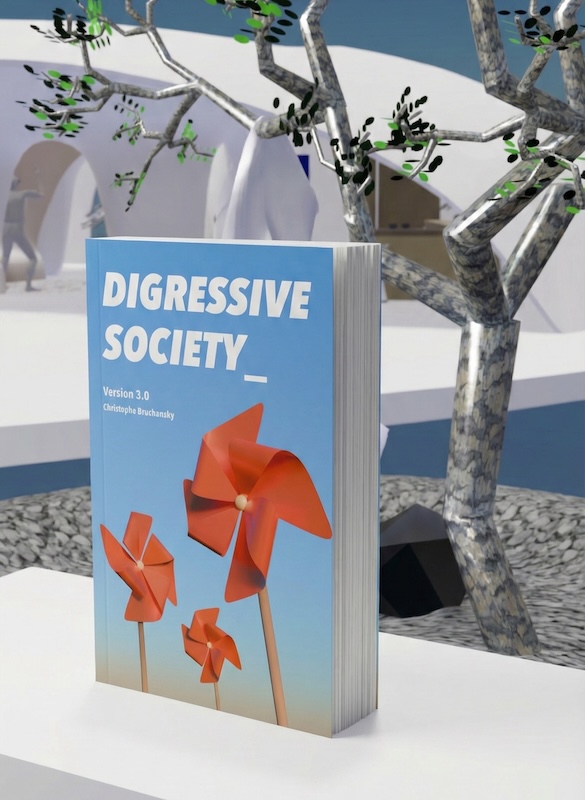
Version 3.0 (November 2025)
Digressive Society is a philosophical essay that invites us to rethink how we live together and proposes an alternative to totalising narratives and dogmas of all kinds.
In the book, I apply postmodern philosophies to the major transformations of our time: technological acceleration, hyper-consumerism, and virtual echo chambers.
I develop an original project — a “digressive” society founded on the ambiguity of human existence — a theoretical framework that I unfold across the cultural, economic, and political spheres.
La Société digressive est un essai philosophique qui invite à repenser le vivre-ensemble et propose une alternative aux récits totalisants et aux dogmes de tous ordres.
J’y applique les philosophies postmodernes aux mutations de notre époque : accélération technologique, hyperconsumérisme, chambres d’écho virtuelles.
J’y développe un projet original — une société dite « digressive » fondée sur l’ambiguïté de l’existence humaine — un système théorique que je déploie dans les domaines culturel, économique et politique.
Augmented with illustrations and QR codes giving access to videos and virtual reality works, this book, rich in practical applications, opens a fertile space for reflection for readers of contemporary philosophy.
Accompagné d’illustrations et de QR codes donnant accès à des vidéos et à des œuvres en réalité virtuelle, ce livre, riche en applications, ouvre un espace fertile de réflexion pour les amateurs de philosophie contemporaine.
The Book in Seven Questions
Is there an alternative to progress-based political models?
Yes. The book proposes a digressive society—a model that values interruption, deviation, and ambiguity rather than linear progress. Human lives don’t move in straight lines; we wander, regress, and reinvent ourselves. A political system should reflect this fluidity instead of forcing everyone into a single narrative of permanent improvement.
How should we understand freedom?
Freedom isn’t the absence of constraints—it’s recognising that most constraints are arbitrary and open to interpretation. Once we stop treating them as absolute, we regain the ability to choose the meaning we give to our lives. A digressive society doesn’t remove limits; it reveals their contingency so individuals can act with intention rather than submission.
What’s wrong with today’s economy?
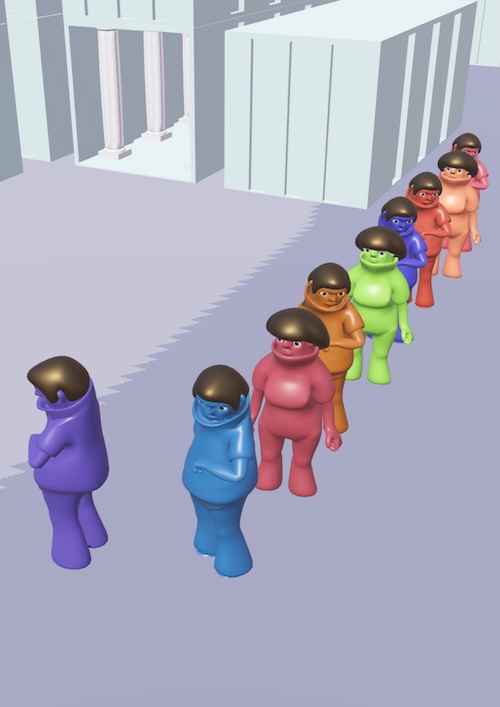
Today’s economy treats one form of value as universal. This suppresses alternative ways people seek meaning. When only one type of competition is allowed (economic competition), real choice disappears. A digressive society restores multicompetition by allowing many value systems to coexist and compete, so individuals can pursue diverse and even contradictory goals.
How can culture help us reconnect in an increasingly fragmented world?
Culture regains its power when it becomes a space of shared negotiation rather than passive consumption. Instead of sanitised, pre-packaged experiences, the book argues for cultural spaces that invite dialogue, disagreement, and co-creation.
Does justice really exist?
Justice is not absolute. Different value systems define it in incompatible ways, and no single definition can claim universal authority. Under value pluralism, justice is one narrative among many—useful, meaningful, but not final. A healthy society allows multiple interpretations of justice to coexist rather than enforcing a single moral framework.
Can value pluralism work without collapsing into relativism or chaos?
Pluralism doesn’t reject values; it rejects the dominance of any single value system. It maximises the range of meaningful choices people can make while accepting that all moral frameworks are subjective. It’s not anarchism—it’s structured coexistence among many visions of the good.
How can digital technology truly help us?
Digital technology helps us when it expands our world instead of narrowing it. Current interfaces often mirror our desires and create egocentric, frictionless environments that reduce empathy and limit exposure to difference. Technology becomes meaningful when it fosters unexpected encounters, supports pluralism, enables alternative realities, and strengthens our imagination rather than just our consumption.